The forecasters have stopped hedging. NOAA’s Climate Prediction Center says there’s a greater than 90% chance of a very strong El Niño this fall and winter, and a 75% chance it’ll be the strongest on record since 1950. If you’re planning a dinner, a retreat or a wedding on this coast between now and next summer, here’s what that means, what it doesn’t, and how we’d plan around it.
Jump to: What the forecast actually says · What El Niño has done here before · Why this year could be different, either way · What a big El Niño winter looks like on the ground · Is winter still a good time for a dinner here? · Does it reach wedding season? · How to plan ahead
What the forecast actually says
El Niño is warm water piling up in the eastern tropical Pacific, and it shifts where winter storms go. This one is building fast: in August, the ocean off Peru was running more than 3°C above normal. CPC expects it to peak between October and January, then fade through the spring. By April to June 2027, the most likely state is neutral again.
The headline for California is a wetter winter, but the strongest signal is usually in the southern half of the state. We sit in what forecasters call the transition zone. CPC’s official outlook for Fort Bragg and Ukiah gives equal chances of a wet or dry fall, then tilts wetter from December, with the strongest local signal from January through March (a 40–50% chance of above-normal rain, against the usual 33%). CPC says those odds may go up in its next outlook on October 15.
What El Niño has done here before
Here’s the honest part: on this coast, El Niño has been a coin toss more than a guarantee. Mendocino County’s emergency office counted nine strong or very strong El Niño winters since 1950 and found three wetter than normal, three drier and three about average.
The big one everybody remembers is 1997–98. Fort Bragg got 79 inches of rain that winter, 183% of normal, and 21.5 inches fell in January 1998 alone, nearly three times the usual. The last very strong event, 2015–16, landed here at about 125% of normal: wet enough, but nothing like ’98. (It was Southern California that got let down that year.)
There’s one more twist. Some of the worst river floods on this coast came in ordinary winters, not El Niño ones. The Navarro crested higher in 2005 and 2019 than it did in 1998. Atmospheric rivers don’t check the ocean forecast first.
Why this year could be different, either way
Two things are pulling in opposite directions. On one side, this may be the strongest El Niño ever measured, and UC climate scientist Daniel Swain told the Mendocino Voice he puts the odds of a wetter-than-average winter on the coast at 80 to 90%. On the other, a pattern in the North Pacific called the PDO is strongly negative this year. It was positive in all three of the famous big El Niño winters, and CPC says it “may dampen the typical impacts” in some places, possibly with cooler water right along the West Coast.
So the wet odds are real, but it isn’t 1998 on rails. The state isn’t waiting to find out: on September 21, the governor declared a statewide El Niño emergency to pre-position sandbags, pumps and Caltrans crews.
What a big El Niño winter looks like on the ground
If the storms do come, here’s what changes for anyone visiting the coast.
Roads. Highway 128 through the Navarro River redwoods is the main way in from the Bay Area and Anderson Valley, and it floods. It closed again for about a day last February. When it does, the detour is Flynn Creek Road to the Comptche–Ukiah Road, which is slower and narrow. Highway 1 can close at the Garcia River near Point Arena, and slides happen on Highway 1 and Highway 20 in heavy storms. Caltrans QuickMap and MendoAlert are the two things to check the morning you drive.
Power. Winter outages here come from wind and saturated ground bringing trees down on lines. In a January 2023 storm, more than 1,800 customers lost power around Gualala and Point Arena alone.
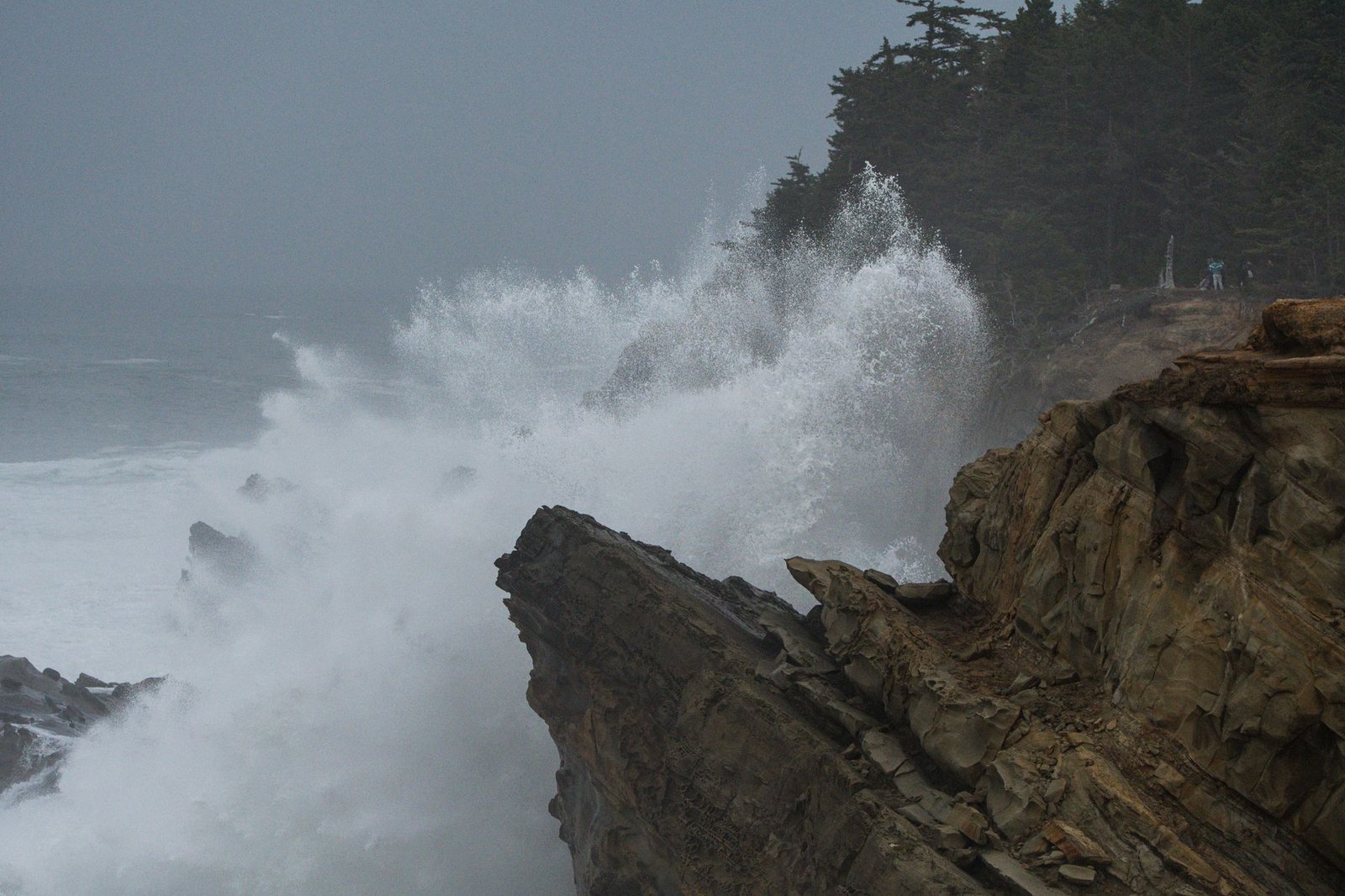
Surf and tides. El Niño raises sea level along the West Coast for a while: NOAA puts it around six inches, and Swain says it could be a foot or more. Big swell on top of a king tide is when beaches and low coastal trails get dangerous. It’s also, from a safe bluff, one of the great sights on this coast.
The ocean on your plate. Warm water shuffles the seafood. Dungeness crab is the one to watch: last season, domoic acid pushed the recreational opener here from November to December 12, and in the 2015–16 El Niño the California opener slipped to late March. A strong El Niño tends to raise that risk again. Warm years can also bring albacore and squid farther north than usual. We build menus around what’s actually landing, so a late crab season changes the fish course, not the dinner. For what’s landing right now, see October on the Mendocino coast.
Is winter still a good time for a dinner here?
Yes, and we’d argue it’s the best-kept secret on the coast. Winter’s our quiet season: rentals are easier to book, restaurants are calmer and the coast belongs to the people who came for it. A storm outside and a long dinner inside a warm house is exactly what a lot of our guests come for.
What changes is how we plan it. We’ll watch the forecast and the roads with you in the days before, and build a menu that can flex if the boats stay in. If a big storm’s on the way, we’ll talk it through early, not on the day.
Our favorite version is the storm-watch dinner: a rental with big windows on the water, a front rolling in off the Pacific, and us in the kitchen while you watch it arrive. Something braised, something roasted, crab if the season’s open, and a table nobody has to drive home from. It’s how a lot of people spend the holidays on the coast, too. Tell us your date and we’ll keep an eye on the sky with you.
And there’s plenty to plan a trip around: the whale festivals in March, the Crab Cake Cook-Off in February, Seafood & Sips in January, and mushroom season, which starts with the first real rains. The Fungi Festival is November 14–15.
Does it reach wedding season?
Probably not much. By April through June 2027, CPC gives the most likely outcome as neutral conditions, and its rain outlook for our spring is equal chances: no tilt either way. The heart of the coast’s event season, May through October, is normally close to dry. Fort Bragg averages about an inch and a half of rain in May and less than an inch in June.
But we’d be doing you a disservice if we said spring rain can’t happen after a big El Niño. May 1998 brought more than four inches to Fort Bragg, over two and a half times normal. It isn’t the forecast. It’s a reason to have a rain plan for a spring event, which on this coast is good advice in any year.
If you’re weighing dates, here’s roughly how we’d think about it:
November through March: the El Niño window. Book it, love it, and plan for weather: a house that can seat everyone indoors, flexible arrival times and a backup for the fish course.
April and early May: most likely back to normal, with a small real chance of a late storm. Have an indoor option and a tent that’s rated for wind, not just rain.
Late May through October: the usual coast. Fog in summer, the clearest weather in September and October, and El Niño should be long gone.
How to plan ahead
Pick a place that works indoors. For anything between November and April, make sure the rental or venue can seat your whole group inside, even if you’re hoping for the deck. For a microwedding or a winter retreat, that one decision does more than any forecast.
Give your guests a weather plan. Send the Highway 128 detour and the MendoAlert link with the directions. Suggest arriving in daylight, and building in an extra night if people are driving up from the Bay.
Ask your venue and vendors what they do in a storm. The good ones have answers ready. That goes for us too, so ask.
Keep the menu flexible. Especially for crab. If a Dungeness dinner matters to you, plan it for later in the winter and have a second course in mind.
Book early for spring and summer. If a wet winter pushes people’s plans later, the good weekends in May and June could fill sooner than usual.
More from October on the coast: What’s in season in October · Fall food events · A Halloween weekend plan · Every Halloween event · Halloween dinner at the house · EarthSpoke Farms · Pumpkin Wonderland · Fungi Festival
Planning something on the coast this winter or next year?
Tell us your date and what you have in mind. We’ll talk through the weather, the house and the menu, and cook for you in the house you’ve rented, storm or no storm. See sample menus, what to expect or our pricing.
Sources: NOAA CPC ENSO discussion, September 2026; CPC 90-day outlook discussion; rainfall from NOAA station records for Fort Bragg and Ukiah (1991–2020 normals); Mendocino County on winter preparedness; Mendocino Voice interview with Daniel Swain; Governor’s El Niño emergency proclamation; CDFW on last season’s crab delays; NOAA Fisheries on El Niño and West Coast species. Checked September 25, 2026. Forecasts change; CPC updates monthly.
Mendocino Chef
Staying on the coast? We’ll cook dinner in the house you’ve rented.
Private dinners, retreats, micro-weddings and rehearsal dinners, anywhere in Mendocino County. Tell us your date and we’ll take it from there.